
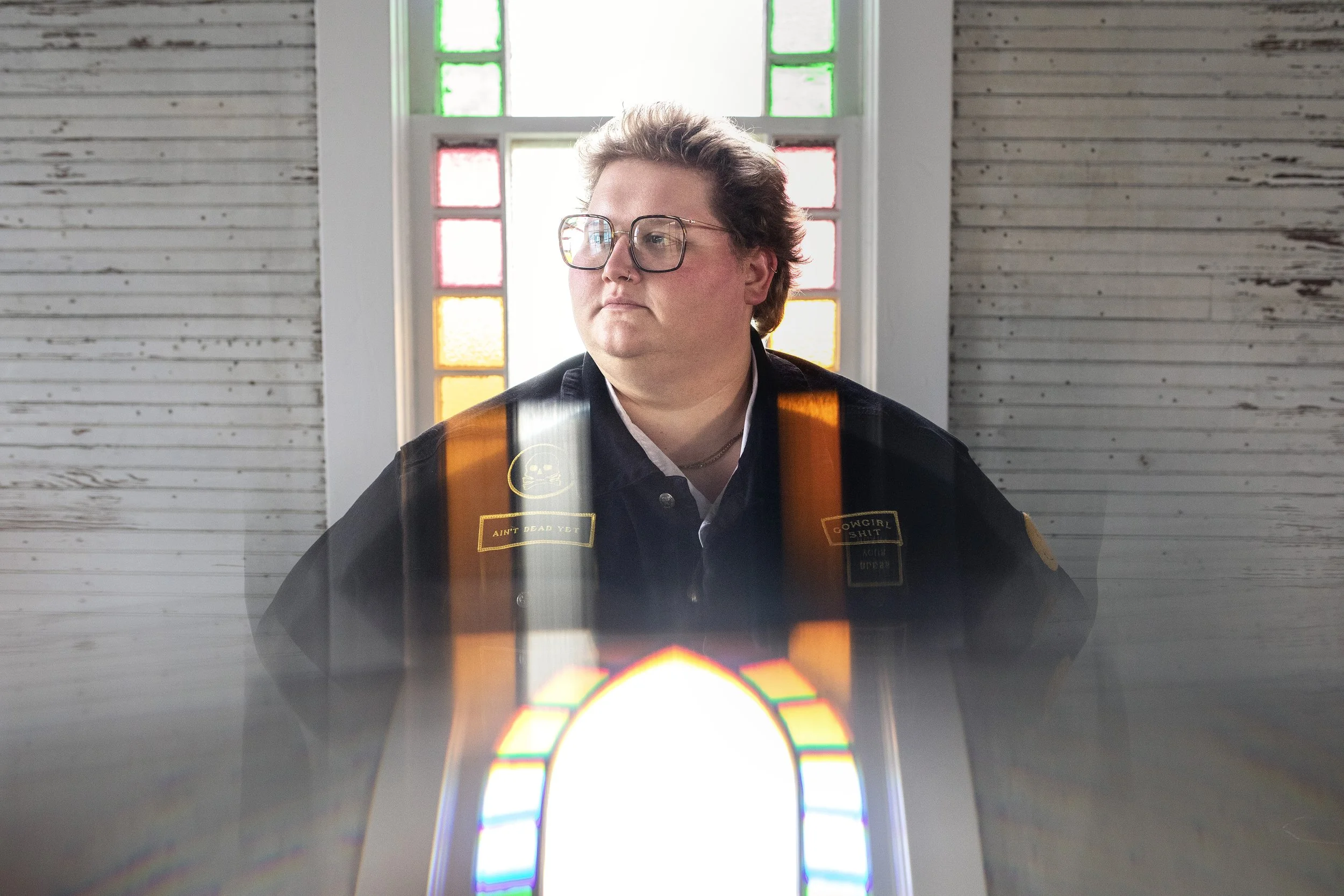
Photo by: Brian Harrington | Western AF
By: Meredith A Lawrence
“I laid in bed for an hour today / Tryin' to die of natural causes / In case the Lord forgot to take me in my sleep,” remains one of the most exquisite descriptions of heartache in country music, and there’ve been many. Not suffering from any particular heartache of my own at the time, I still felt those lines from “Keep” chest-deep the first time I heard Joshua Ray Walker deliver them. Ensconced in the cozy, woodsy darkness of Little Rock, Arkansas’ White Water Tavern, Walker filled the room with his honeyed tenor, its potency carrying the solo acoustic show. Like most of the audience that early December 2018 evening, I’d never heard of Walker. Indeed, this was one of his first shows outside of Texas, two months before the release of his debut album, Wish You Were Here.
Nine months later, on a sweltering hot, late September day at the State Fair of Texas in Dallas, Walker’s stealing time between his third and fourth sets of the day, making up goofy ideas for the photos I'm shooting to go with a story about Walker and other up and coming North Texas musicians. The fair is a lynchpin of the Dallas music scene, but stage time requires grinding out shows in front of half-attentive, fair-giddy audiences. Walker’s energy seems boundless. He ducks into a game booth, the wall plastered in brightly-colored stuffed animals prizes. I snap a shot. He poses in the middle of the melee, arms shoved in the pockets of a light wash denim vest over lemon-yellow and neon-green print Hawaiian shirt. I snap. The boots I'm wearing are hot and heavy, but we keep going. We spot the Ferris wheel, and he helps me clamber up a chest-high metal pole. Grasping it with my legs, I snap a shot with the wheel in the background, its giant lettering spelling out T-E-X-A-S in an arch overhead.
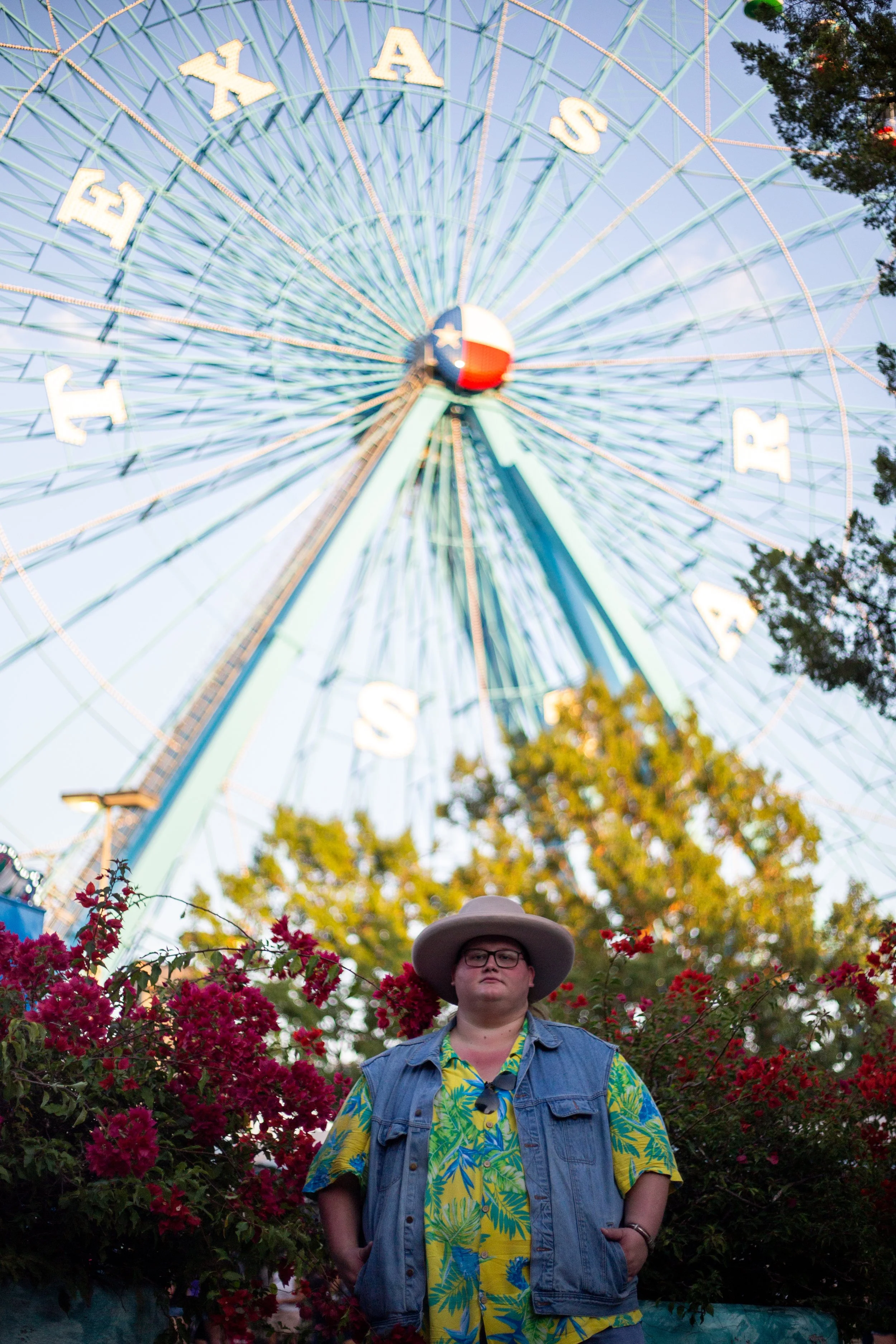
Photo by: Meredith A. Lawrence
Sweaty and inevitably sunburned, we take refuge on the steps of the Cotton Bowl Stadium complex. I snap again as a gentle sunset breeze kicks up and Walker looks out over the heaving, shrieking, glittering, fried chaos of the fair. Walker’s first album's been out for eight months now, and he’s about to set out on his first European tour. It feels like the start of something.
Five months later, Walker’s sitting in a coffee shop in east Dallas. The night before, he cleaned up at the prestigious local Dallas Observer Music Awards, and he’s so hungover he can’t remember where he left his car. Elated, he’s looking forward to what’s next and showing off his Spotify streaming numbers, marveling at how many Scandinavian fans he’s gathered. It's January 2020 and neither of us has any idea how soon the music industry, and indeed the whole world will grind to a halt, ravaged by the early days of the COVID-19 pandemic.
Walker released his second album, Glad You Made It, in July 2020, followed by See You Next Time in October 2021. Together with his first album, they comprise a literary trilogy of lyrical stories that champion the working class misfits he’s met on the road and grew up among, capturing their humanity most often overlooked by society and pop culture. Walker sees the tenacity of women who work miserable jobs (“Working Girl,” “Boat Show Girl”), portrays a series of irreconcilably sad, alluring characters (“Lot Lizard,” “Voices,” “Gas Station Roses”), and revels in the good times available from bad situations (“Burn It,” “Bronco Billy’s,” “Three Strikes”).
When Walker began touring again, his momentum carried him toward that ineffable something he was on the cusp of two years earlier at the fair. At the first live music show I attended after the pandemic subsided, I stood what felt dangerously close to other people, shoulder-to-shoulder in the clammy darkness of New York’s Mercury Lounge, listening as Walker held the packed room full of New Yorker, and clear he’d made it far outside of Texas. In the next couple years, beyond sold out shows and bucket-list venues and tours, Walker sang the National Anthem at the United States Grand Prix; appeared on late night TV for the first time, singing his garrulous barroom anthem “Sexy After Dark” on the "Tonight Show Starring Jimmy Fallon;” soon after, in April 2022, Walker debuted at the Ryman and Grand Ole Opry back-to-back; he put out a covers album of female pop songs What Is It Even?; and opened for The Killers.
Then, in December 2023, Walker scheduled his second late night TV appearance, this time on Jimmy Kimmel’s show. Decked out in a hot pink suit and full of verve, Walker yipped and howled his way through a cover of Lizzo’s “Cuz I Love You.” It’s a breath-stopping, playful performance, which betrays no hint of the secret Walker carried into the taping.
That morning on the way to the airport, he’d gotten a call from the doctor; he had cancer. Later, he’d learn more: colon cancer, stage 3B.
“I don’t know that success is ever uncomplicated. But I do think the way my life has gone is a one-for-one trade off.”
“I don’t know that success is ever uncomplicated. But I do think the way my life has gone is a one-for-one trade off,” Walker says. “Life is a trade off, but I feel like mine has been extra transactional.”
Joy and pain counterbalanced each other in Walker’s music career from the very beginning. He wrote his first song “Pale Hands,” in the hospital parking lot in the wee hours of Christmas Eve after his grandfather (who taught him to love country music and to play guitar) died, just 11 days after his own cancer diagnosis; two of Walker’s best and most raw, intricate songs “Canyon” and “Flash Paper” deal with his complicated relationship with his father, who died of cancer just as Walker’s career caught traction; his show business dad and mentor, Trey Johnson died unexpectedly of a heart attack the day before Walker’s Fallon show aired; and now a cancer diagnosis as Walker flew to record on Kimmel.
At the beginning of 2024, the music stopped. Walker traded the teaming, beer-soaked chaos of country stages for the monotony and tedium of sterile medical facilities. Life became about treatment and symptoms and numbers and surviving.
But Walker didn’t stop. He wrote: Tropicana, the beachy, vacation album antidote to pale, bleak walls and hospital lighting; Stuff the adventurous and triumphant album on which Walker personifies the object he might find at a garage sale; and Ain’t Dead Yet his most personal album to date. Released in a matter of months between late 2025 and 2026, Walker dubbed this trilogy The Cancer Tapes, capped off by a documentary chronicling his cancer, “Thank You for Listening.” It’s the kind of concentrated creative effort that only comes from a really hard deadline, which in this case, Walker put in motion after an erroneous diagnosis led him to believe he might have months to live.
Ain’t Dead Yet ends with a thank you note to Walker’s fans. Wry yet sincere, “Thanks for Listening” is some of Walker’s best writing:
Thanks for listening to all my sad songs
Thanks for loving me when I sing the words wrong
Makes the bad times not seem so long
Thanks for listening
I coulda bit down on a dry fire
'Cause God made me with some crossed wires
Would've been singing in an angel choir
Thanks for listening
Stepping into his music as one of his characters afforded Walker’s songs new, hard-won depth. But now, out the other side and nearly two years cancer free he’s trying to pick up where he left off. The days before cancer are lost to the proverbial sands of time, but even with a fresh body of quality work and tight stage set, Walker’s not sure how to recapture what once was.
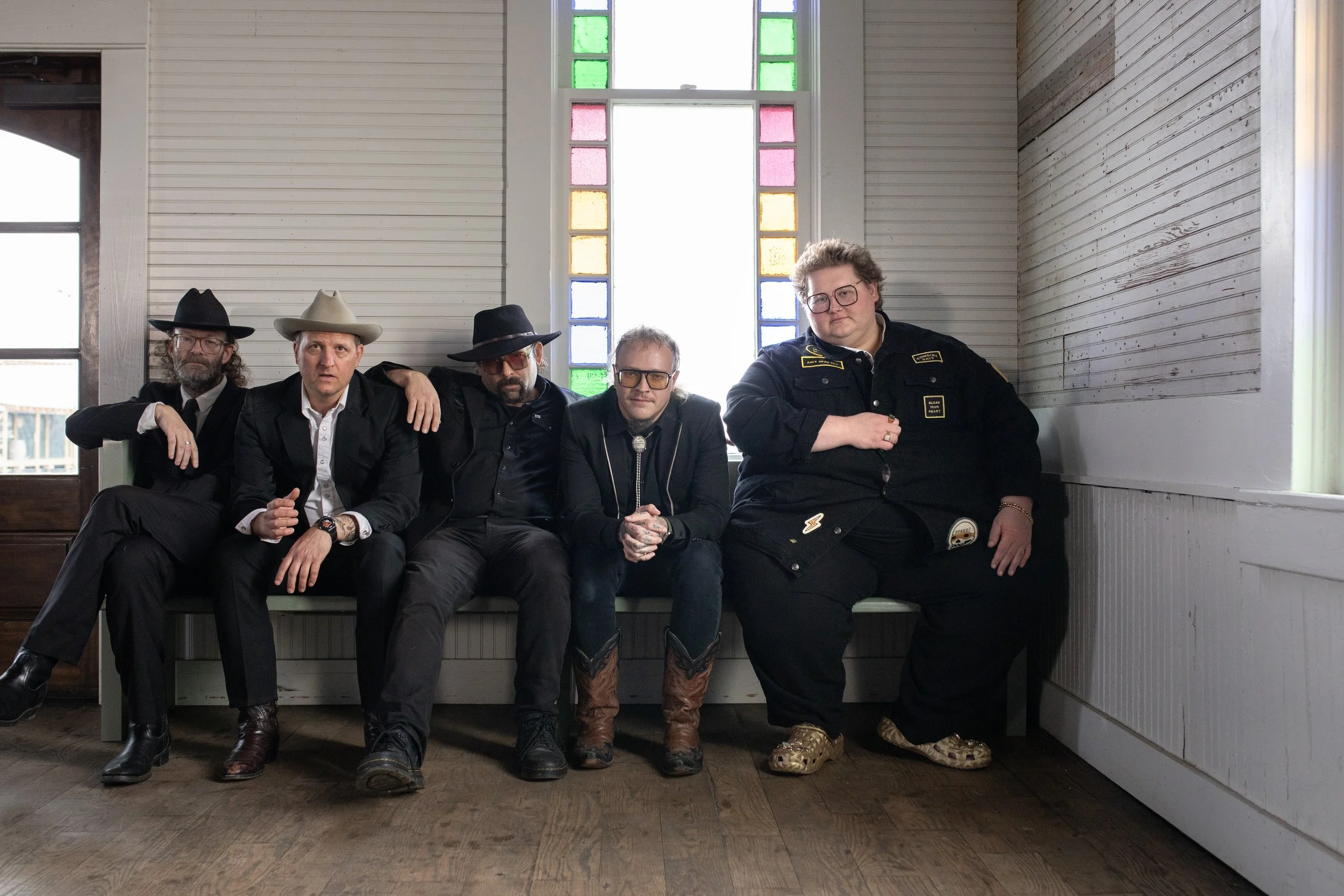
Photo by: Brian Harrington | Western AF
“Besides the economy, nothing has been in my way for the last year. I’ve done everything to the best of my ability, my shows are better than ever,” Walker says, perplexed. “I’m still hitting new benchmarks for what ‘success’ means, but not feeling that buzz around career felt previously and I can’t imagine what else I can do.”
Like so many other independent musicians, Walker finds the margins thinner than ever — touring and making music, indeed just buying groceries and subsisting, cost more, and reaching audiences (even ones who want to be found) and cutting through the noise, seems next to impossible. Walker’s streaming and socials numbers are up, his latest album was his highest charting yet, he’s touring hard again, and he’ll be one of the voices singing on the Opry 100th anniversary compilation album. And, prolific as ever, Walker says he knows what he wants his next six albums to be. Yet, he’s not sure how viable it can be to make those records.
“If you had asked me in 2018, before my first record came out, where I'd be at financially, and then showed me everything I had accomplished up until this point, I would be flabbergasted to know that I still make less than a public school teacher,” Walker says.
Tired of silently suffering the ways making a life in music squeezes so many artists, Walker’s started talking about it, launching a series of no holds barred ticket sales videos on Instagram and is considering auctioning off items from his career to make ends meet next year. Everything feels like a calculus designed to make a little bit of money. Lately, there’s no room for creativity for art’s sake.
“I’ve not known where the money is coming from for the last 20 years, but my life has never fully fallen apart, which I think is a testament to how hard I’ve worked,” Walker says, wondering if next year he’s going to need to pick up a day job to make ends meet. “I’ve just believed that if I keep showing up and doing my best it will work out; this is the first time in almost 20 years that I thought ‘I don’t know that the money is going to show up.’”
Aint Dead Yet isn't just a macabre finger to the sky, it's also a promise. A plea to get back to it. At the time of his cancer diagnosis, Walker was on track to become one of the best and biggest voices in the independent Americana/country music scene. Indeed, his cancer didn't change that, he still is. But how to reconnect the dots? Enduring is only part of it. What comes next is sometimes even harder.
Instead of goals, and bucket list items (though he’s still hoping to make that Red Rocks slot happen), Walker’s focus shifted to something gentler, simpler. “I want my health. I want a safe place for me and my family to exist, and I want to have the freedom to make records that I want to make,” he says. “And I feel like that's not too much to ask, but it seems increasingly difficult.”
Chasing the pot of gold at the end of a rainbow never did much good; it was always the dream that mattered.

Western AF is not currently accepting feature pitches for Western Dispatch. If you simply can’t help yourself you can send it to westernafsubmissions@gmail.com but, really, we aren’t accepting pitches.